
- Products & Capabilities

- About
- Resources
Understanding Industrial PCB Production


Learn about industrial PCB production processes, types, challenges & industry trends and explore reliable industrial PCB manufacturing for modern electronic applications.
Printed Circuit Boards (PCBs) are the backbone of all industrial electronic equipment, which are used to connect electronic components to provide power to automated equipment, energy storage systems, medical devices and aerospace modules. Unlike low cost consumer PCBs, which are designed for short product life cycles, industrial PCB production focuses on reliability over time, resistance to extreme environments and dimensional accuracy to the highest standard of IPC global manufacturing quality standards. All the steps from raw material screening to finished-board stress testing are designed to withstand the factory vibration, temperature differences, humidity and voltage fluctuations and allow 5-20 years of continuous use. To ensure the production of stable and mission critical industrial devices, an electronics designer, procurement and production engineer must be familiar with the whole industrial PCB manufacturing system.
Core Raw Materials & Industrial PCB Categories
A circuit board's operating range is directly determined by the materials used. For general industrial controllers, FR4 fiberglass epoxy laminate continues to be used, whereas other special substrates are designed to handle these extreme conditions: metal-core boards for high power dissipation; polyimide substrate for flexible robotic wiring and low-loss PTFE laminates for high frequency industrial communication hardware. Thick copper foil is suitable for high current, and solder mask ink is good for dusty workshop environments, as the performance of the two is high.The thick copper foil can be used for high current, and the solder mask ink's performance is also high, which can prevent oxidation and short circuit.
For a variety of needs, manufacturers create six variants of the main industrial PCB products: single sided boards, double sided boards, multilayer boards, rigid boards, flexible boards and rigid-flex hybrid boards, which effectively doesn't need bulky wiring in automated production lines.
Standard End-to-End Production Workflow
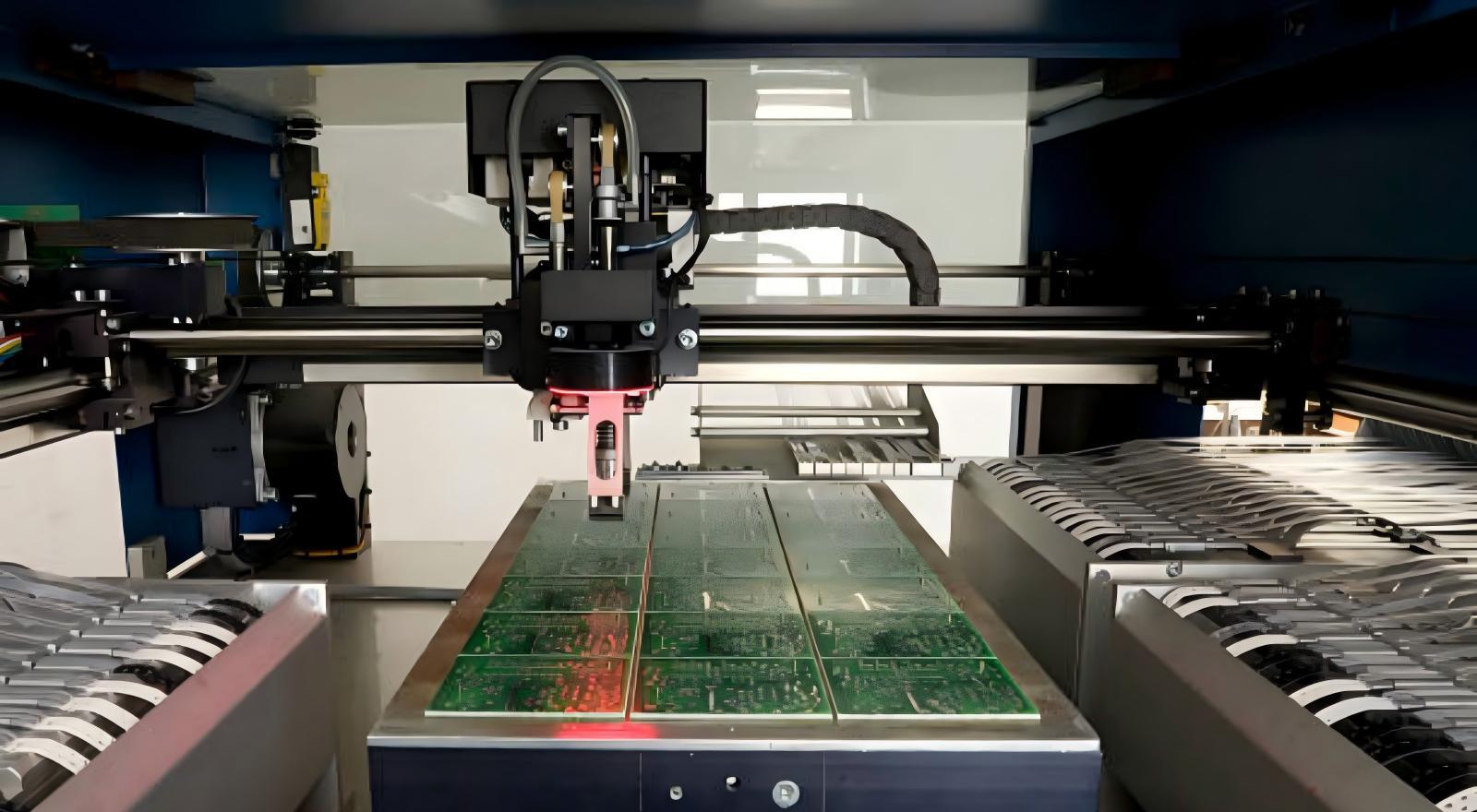
The fabrication of industrial PCB is a well-controlled process which has a sequence. It starts with submitting the Gerber file and runs the mandatory DFM (Design for Manufacturability) check to eliminate potential layout problems such as narrow traces or too small of a via, improve production yield and prevent production issues.
In multi-layer boards, the inner layers are printed with the laser imaging system, chemically etched and inspected with AOI to ensure accurate circuit patterns. To prevent interlayer delamination, the inner cores and insulators prepreg pieces are laminated under high temperature and vacuum pressure. CNC drilling is used to make through-hole, blind and buried microvias, after which the conductive walls of the holes are formed by electroless and electrolytic copper plating to enable the cross-layer transmission of signals.
Surface finish is applied after outer layer patterning: ENIG gold plating is the best surface finish for high-reliability industrial equipment because of its stable long-term solderability; OSP and HASL are cost-sensitive surface finishes for low-power products. Next comes solder mask coating, silkscreen labeling and panel cutting to separate large panels into individual PCBs.
The final quality validation includes a number of strict tests: electrical continuity tests for the elimination of open/short circuits, 3D X-ray scanning for the detection of internal defects undetectable by the naked eye, and environmental cycling tests that simulate temperature shock, salt spray and mechanical vibration for automotive and aerospace-grade boards. Many suppliers also provide SMT assembly services that will provide completed PCBA for turnkey industrial projects.
Key Production Challenges & Design Guidelines
There are three common technical challenges in modern industrial production of PCB. In fact, the intelligent factories' hardware is miniaturized, requiring micron-level processing accuracy with ultra-fine traces and micro-via. Secondly, new energy inverters and motor drives produce a huge amount of heat and require adequate thermal stack up and heavy copper designs to prevent thermal burn out as a result. Third, high speed industrial circuits for IoT devices are susceptible to EMI when not designed with controlled impedance routing and good ground planes.
To deal with these risks, engineers should implement industrial design best practices: fixing the width of traces to the existing load, creating thermal vias near high-power chips, putting decoupling capacitors near IC pins and leaving vibration-resistant spacing around connectors and mounting holes.
Industry Applications & Future Development
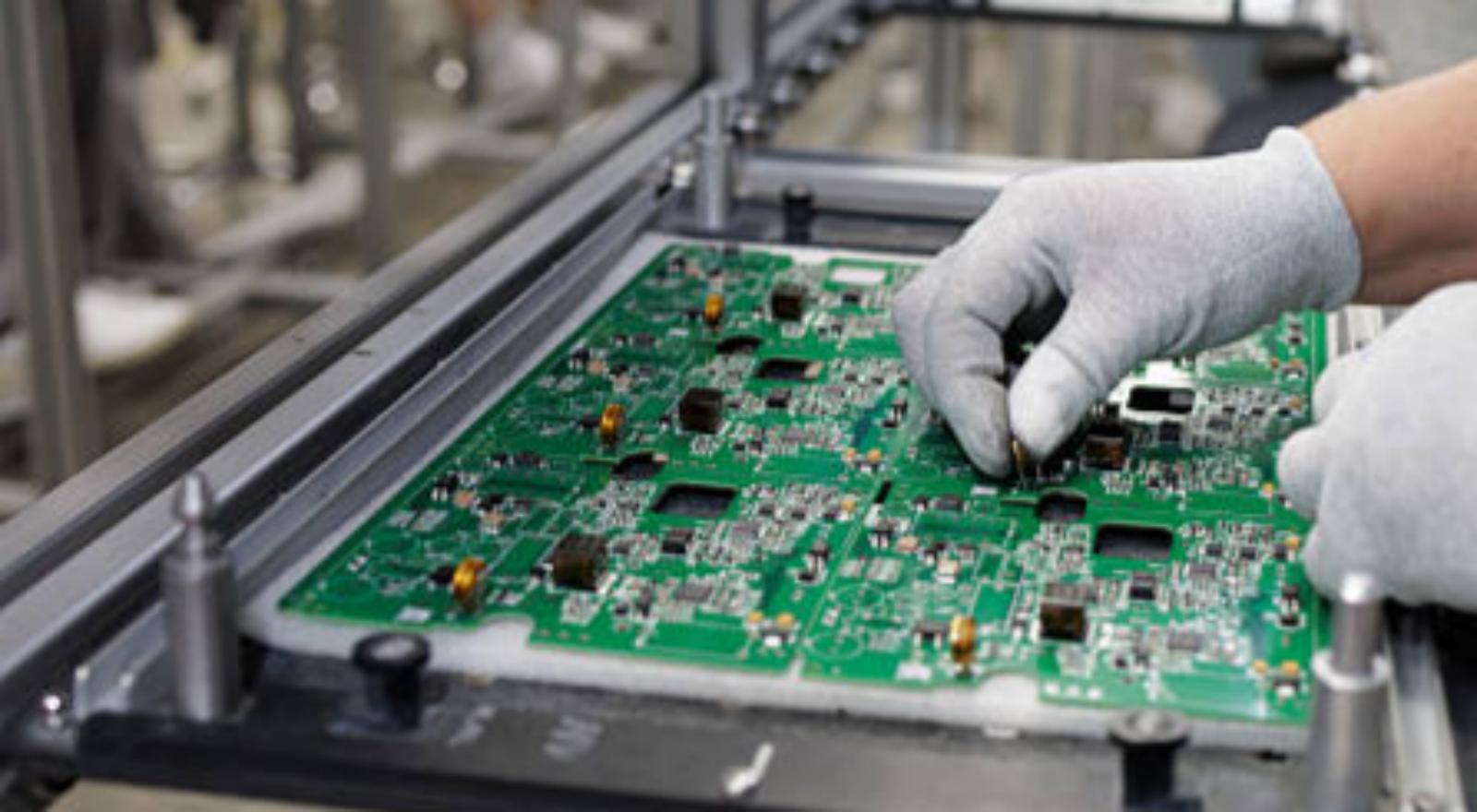
Automotive battery management systems, factory PLC automation controllers, diagnostic medical monitors, renewable energy inverters, and satellite communication hardware are all based on the use of industrial PCBs in almost all high-value manufacturing verticals. Looking at the Industry 4.0 trends, the sector is moving towards AI automated production lines, green low-pollution manufacturing materials and high-density HDI microvia technology, along with smart sensing-embedded circuit boards.
Industrial PCB production is a strict engineering system, focusing on durability and uniformity and having a significant distinction from the production of consumer circuit board. As the demand for intelligent and high-quality, smaller and faster industrial equipment grows, manufacturers have to constantly improve the capacity for precision processing and reliability testing, and make it up to meet the higher industry standards.
PCBX offers automation, medical, automotive and new energy industries a unique prototyping and mass production service for fully compliant customized industrial PCB solutions, such as HDI, heavy copper, rigid-flex and high-frequency boards. With full-spectrum testing labs and stringent quality control measures in IPC, PCBX provides robust circuit boards for every severe industrial working environment.
Hot Tags:

Contact us

If you can't find what you're looking for, please contact us.
Article
PCBs are essential in modern cars, enhancing performance, safety, and connectivity across systems like ADAS and infotainment, while facing design challenges.
 2025/10/09
SMT revolutionizes electronics by enabling smaller, efficient, durable devices, with reduced costs and performance boosts, essential in various industries.
2025/01/24
PCBs are vital components in most electronic devices, including consumer electronics, medical devices, and automotive systems. PCBX offers diverse, high-quality PCBs, driving modern technology with innovation and reliability.
2024/08/29