
- Products & Capabilities

- About
- Resources
Automotive PCBA Conformal Coating Standards


Explore key standards, materials, application practices, and challenges of automotive PCBA conformal coatings to ensure reliability in harsh environments.
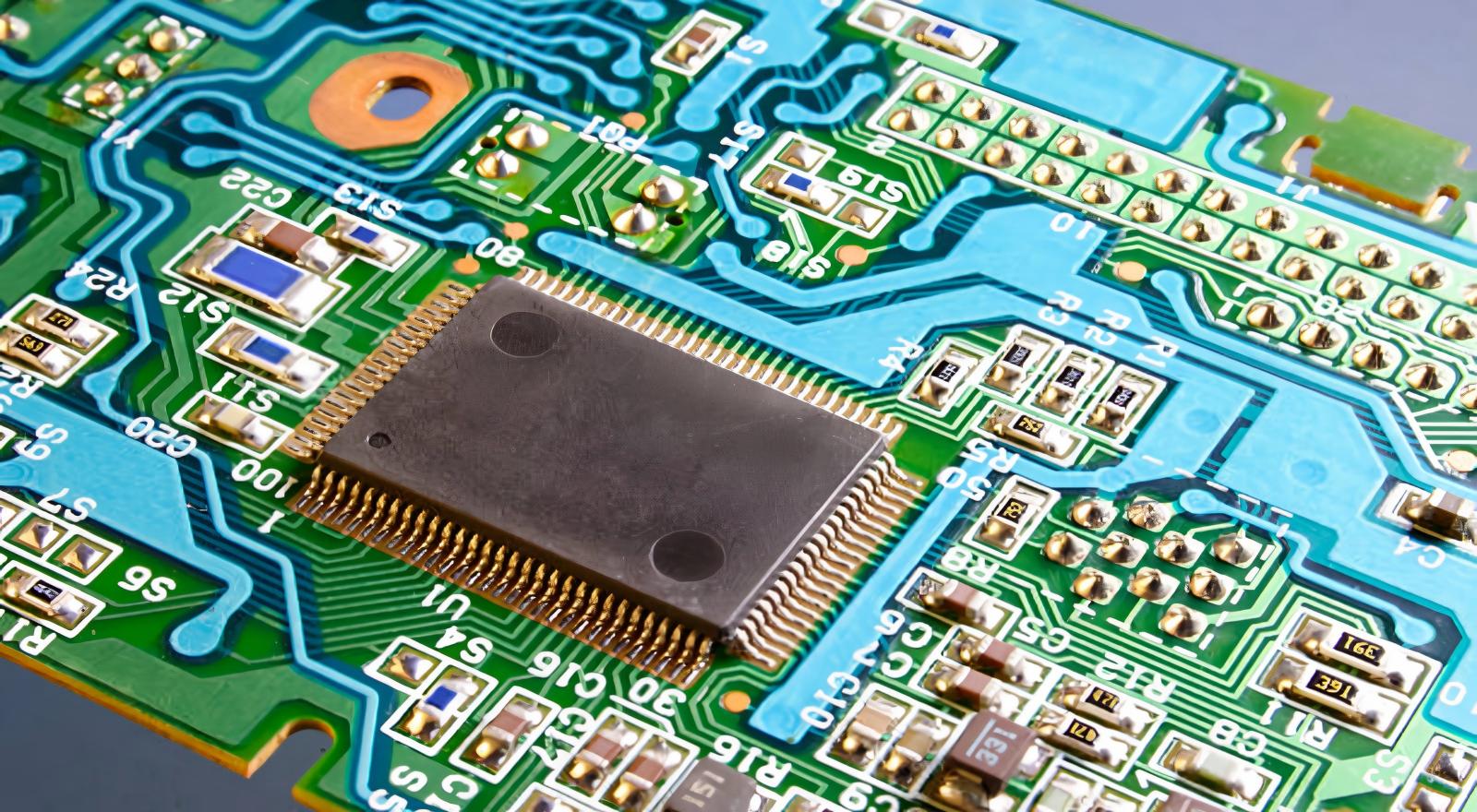
Printed circuit board assembly (PCBAs) provide the foundation of key systems in the rapidly changing automotive market: engine control unit (ECU), infotainment systems, and advanced driver-assistance systems (ADAS). In contrast to consumer electronics, automotive PCBAs are subjected to many harsh conditions: extreme temperature variations (-40℃ to 150℃ in engine bays), excessive humidity (up to 95% RH), and continuous vibration, as well as road salt, fuel vapors, and oils. To ensure that these components are not subject to corrosion, electrical short and premature failures, conformal coatings are a must, but only at the cost of stringent industry standards.
The importance of Conformal Coatings on Automotive PCBAs
Conformal coating are thin polymeric layers which serve as dielectric resistors, protecting PCB traces, solder joints and components against environmental risks. Electrochemical migration in unprotected PCBAs in car It is a process where electrochemical dendrites grow between traces with a spacing of 0.1 mm, resulting in short circuits. The coating pinhole is 0.01 mm in diameter, which can cut the insulation resistance by 50%, putting at risk safety-critical systems such as ADAS. Standard practices in coating lead to regulatory compliance, reduce warranty claims and establish a sense of trust in product life.
Automotive PCBA Conformal Coating Industry Standards
Automotive PCBAs are based on high standards of performance of the coating, quality application, and functional safety. The most important guidelines are as follows:
IPC-CC-830C: Material Qualification Baseline
IPC-CC-830C, the world standard in the qualification of conformal coating materials (acrylic, silicone, urethane, parylene, UV-curable), replaces MIL-I-46058C. Critical conditions: 101º ohms insulation resistance (85℃ to 85% moisture 168 hours), 50 thermal cycle (-65℃ to 125℃) with no crack propagation, UL 94 V-0 flammability, and fungus, moisture and hydrolysis resistance. High-vibration flexibility would make silicones a preferred choice in engine compartments.
IPC-A-610E: Workmanship and Appearances
IPC-A-610E identifies quality in electronic assembly, and Section 10.8 is a discussion of conformal coating. Critical requirements: (absence of) voids/pinholes, (complete) edge coverage of 0402 resistors, should exclude (high-power) components (pinholes, heat sinks, power resistors) to prevent heat entrapment. Dry film thickness varies between 25-130 μm (30-50 μm in production of safety-critical systems); dewetting or variation in thickness leads to field failures.
AEC-Q100: Automotive Electronics Reliability
AEC-Q100 tests, which are procedures via which conformal coatings are tested in terms of their ability to endure environmental conditions over time, were developed by the Automotive Electronics Council (AEC). Important tests: Highly Accelerated Stress Test ( 130℃, 85% RH, 33.3 psig during 96 hours) and Temperature Humidity Bias ( 85℃/85% RH with voltage ). Compliance guarantees 10-15 year service life-i.e. a 0.2 W/m8K silicone coating has a temperature drop of 5-10degC on the components.
ISO 26262: Functional Safety of Critical Systems
ISO 26262 is concerned with functional safety of ADAS, braking and airbag PCBAs. It requires stress tests on the environment: temperature testing (-40℃ to 85℃, 1000 cycles), and vibrational testing (10-2000 Hz, 5g acceleration). Failure of coating undermines Automotive Safety Integrity Level (ASIL), and poses disastrous engineering problems such as slowed ADAS sensor response.
ISO 16750-4: OEM-Specific Requirements
The environmental testing (thermal shock test, chemic resistance test, salt spray test) is defined in ISO 16750-4. Stricter requirements are introduced by automakers: long-lasting temperature cycling (1000+ cycles), heavy exposure to chemicals, and zero-defect quality (PPM < 10).
Automotive Conformal Coating Types
To comply with the standards, the choice of the coating material is important:
Acrylic Coatings: 1000 V/mil dielectric strength, 95 percent RH resistance, cost-effective infotainment. Treatment within 1-2 hours; cannot work in high temperatures (>125℃).
Silicone Coatings: 65℃ to 200℃, 200% elongation, ideal in ECUs. Antivibration, saltspray resistant; heat does not build up (2-5degC temp increase) when applied accurately.
Polyurethane Coatings: 800 V/mil dielectric strength, chemical resistance- under- hood use. The variants cured under UV take seconds to cure, improving efficiency in production.
Parylene Coatings: 0.1-76 um ultra-thin, IPX8 waterproofing, dielectric strength of 7000 V/mil /mil-applied- dielectric-mil-used in airbag controllers. High cost limits niche use.
Application Methods and Best Practices
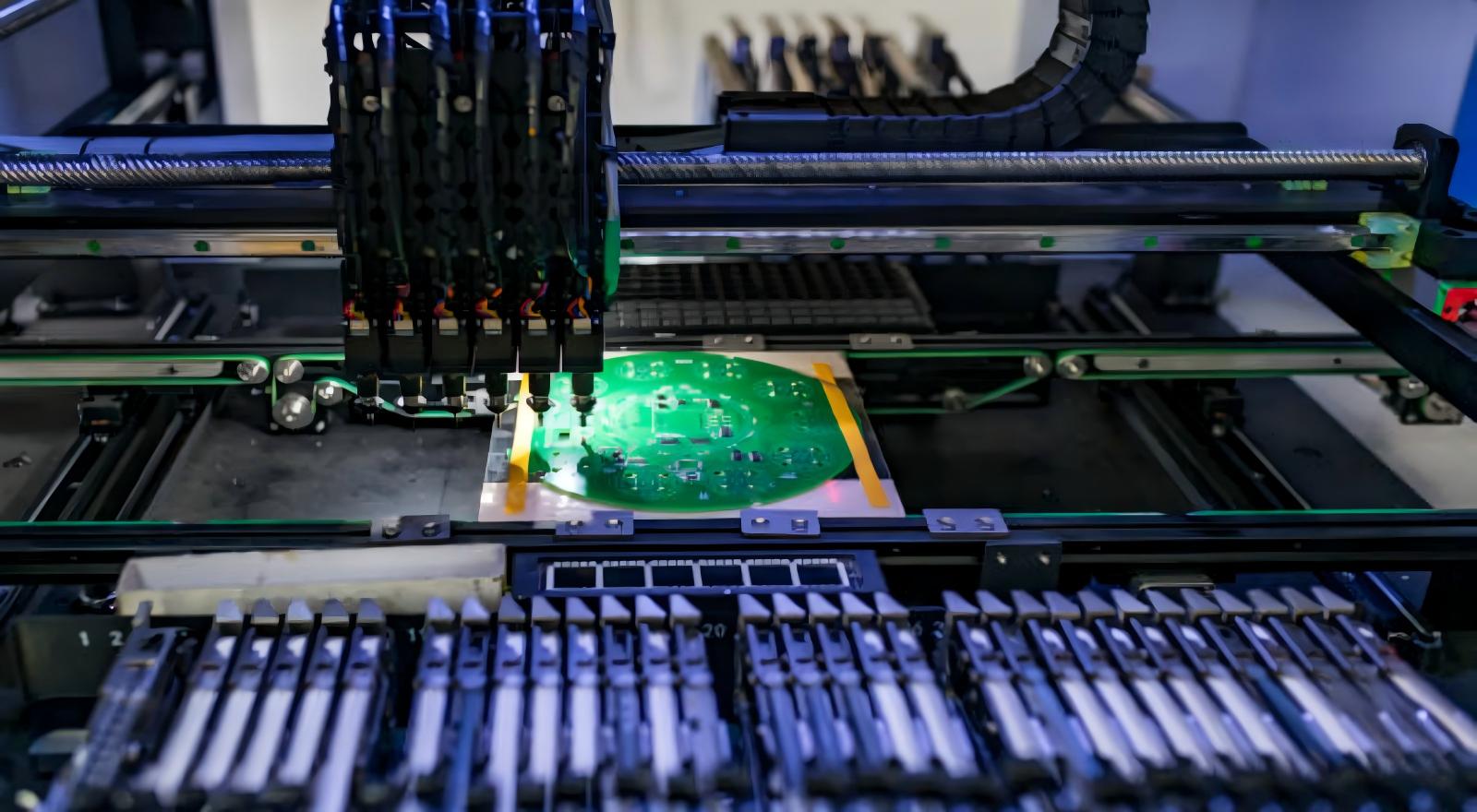
There is coating effectiveness by precise application. Important techniques and good practices:
Selective Spraying: Automated robotic application (50-100 um thickness), 95% coverage accuracy- good in high volume production.
Dipping: Complete 2-sided coverage; regulated by 1-5 mm/s rate of immersion and 100-300 cP viscosity.
Brushing: This is used when it is low-volume/rework; it has a risk of +-20 um thickness variation and bubbles (30% drop in insulation resistance).
Best Practices: Clean PCBAs (vapor degreasing/IPA) to prevent 40% loss on adhesion thickness; test 25-130 um thickness; with AOI test 0.05 mm pinhole (99% accuracy).
Key Challenges & Solutions
Thermal Management: Thick Coatings (200μm silicone) increase MOSFET temp by 8℃ - apply parylene or optimize heat sinks.
Reworkability: It is difficult to get silicones/polyurethanes reworked- rely on reworkable acrylics where it is not essential.
Cost vs. Performance: Parylene ($50/board) is expensive-mix acrylics (low-risk) and silicones (high-stress zones).
Such standards as IPC-CC-830C, IPC-A-610E, AEC-Q100, ISO 26262, and ISO 16750-4 are the basis of reliable automotive PCBAs. With an appropriate coating choice, observing accurate application techniques, and following these standards, engineers provide PCBAs that resist harsh conditions, safeguard safety-critical systems, and can be expected to serve 10-15 years. To manufacturers, standard mastery has become a competitive edge in the development of durable, safe automotive electronics.
Hot Tags:

Contact us

If you can't find what you're looking for, please contact us.
Article

IATF 16949 is the global automotive QMS standard, building on ISO 9001 to ensure defect prevention, risk control, and high-quality PCB manufacturing.
 2026/03/17
PCBs are essential in modern cars, enhancing performance, safety, and connectivity across systems like ADAS and infotainment, while facing design challenges.
2025/10/09
IoT and RFID integration revolutionizes device communication, improving data, asset, and operational management. PCBX supports these innovations amid challenges.
2024/10/28