
- Products & Capabilities

- About
- Resources
Component Lead Forming Techniques in Leaded Assembly


Learn core component lead forming techniques for axial & radial components, best practices, tools, and defect solutions to boost leaded assembly quality and production efficiency.
Through-hole leaded assembly continues to be required in industrial controls, automotive systems, power devices, and high-reliability equipment in modern electronics manufacturing. Its high mechanical, great heat resistant, and stable solder joints have made it very popular even with the rise of surface-mount technology. Component lead forming is a major preparation process that involves shaping, bending, and trimming component leads to match PCB component hole designs, minimizing mounting stress, and facilitating easy insertion and soldering. This procedure has a direct impact on assembly yield, component safety, solder joint reliability and long-term product reliability. The lack of good forming may cause broken parts, loose solder joints, electrical deficits, and premature field failures.
What Is Component Lead Forming and Why It Matter?
The component lead forming process involves the manipulation of the metal leads of through-hole electronic components to fit the requirements of the PCB layout, such as hole pitch, mounting height and orientation. Components that are factory-fresh have straight and unmodified leads and may seldom fit into standard PCB designs. Technicians will be unable to insert components in a steady manner and form solder connections that are reliable without proper forming.
Controlled lead forming has the following obvious advantages:
Avoids any mechanical stress around component bodies.
Upholds integrity of lead and quality of plating.
Maintains proper positioning with PCB through-holes.
Lessens the danger of short circuiting due to excess lead.
Enhances consistency of assembly and efficiency of production.
Regardless of whether the prototyping is done manually or by automation, mastering lead forming is important in the creation of long-lasting and durable electronic assemblies.
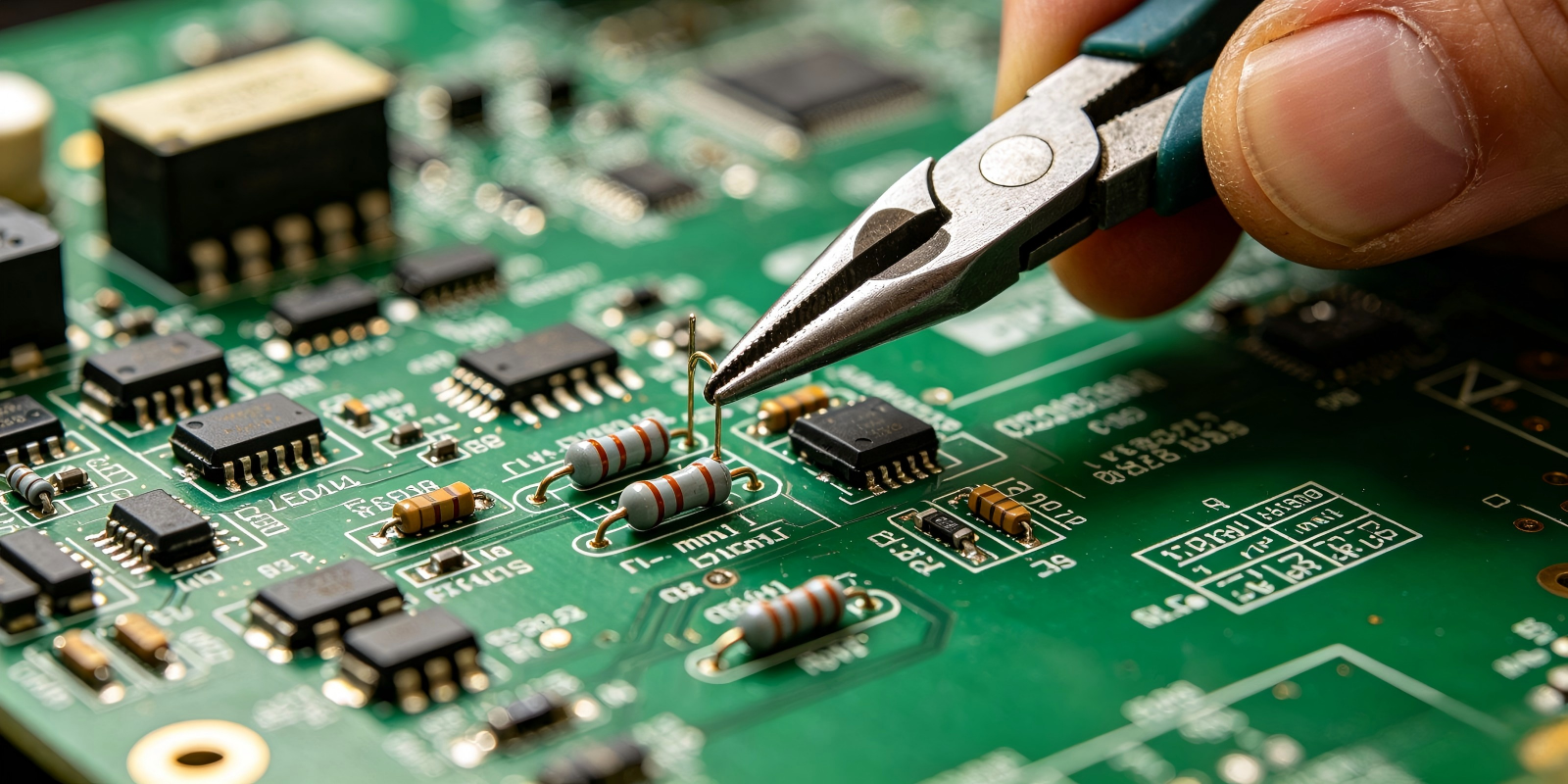
Axial and Radial Component Forming Techniques
The two categories of mainly used components in leaded are subjected to different ways of forming.
Axial components (resistors, diodes, inductors) have leads running off at opposite ends. Ordinary ways of forming are horizontal bends to mount flat and vertical bends to save on board space. Key rules include:
Bend not less than 1 mm or 2 mm off the component body in order not to crack.
Instead of sharp kinks, use rounded bends that are smooth and rounded.
Keep bends symmetrical to be stable.
Trim results in 1-2 mm above the PCB following insertion.
Parallel leads are on one end of radial components (electrolytic capacitors, transistors). Forming is concerned with matching and soft adjustment of pitch:
Check lead pitch to PCB hole spacing.
Correct minor, low stress errors as necessary.
Make sure to ensure that the component is flat against the board.
Polarized parts should always be checked in terms of polarity.
Such practices avoid the harm and provide uniform and stress-free mounting.
Manual, Jig and Automated Forming Solutions
Forms of Lead forming depend on the scale and the precision requirement of the production.
Forming is done by hand with a rounded pliers and simple tools. It is simple and adaptable and suitable to prototypes and small batches. It is however heavily reliant on the skill of operators and may not be consistent.
Semi-automation through Jig involves custom fixtures to manage the bend angle, length and pitch. This is a highly effective way of enhancing uniformity, and it is applicable to medium-volume production.
Mass manufacturing is also provided through high speed and repeatability on automated forming machines. They combine bending, trimming and inspection in order to handle thousands of components in an hour with minimum errors. The method facilitates quality and efficiency of large-scale assembly lines.
Best Practices of Lead Cutting and Essential Tools
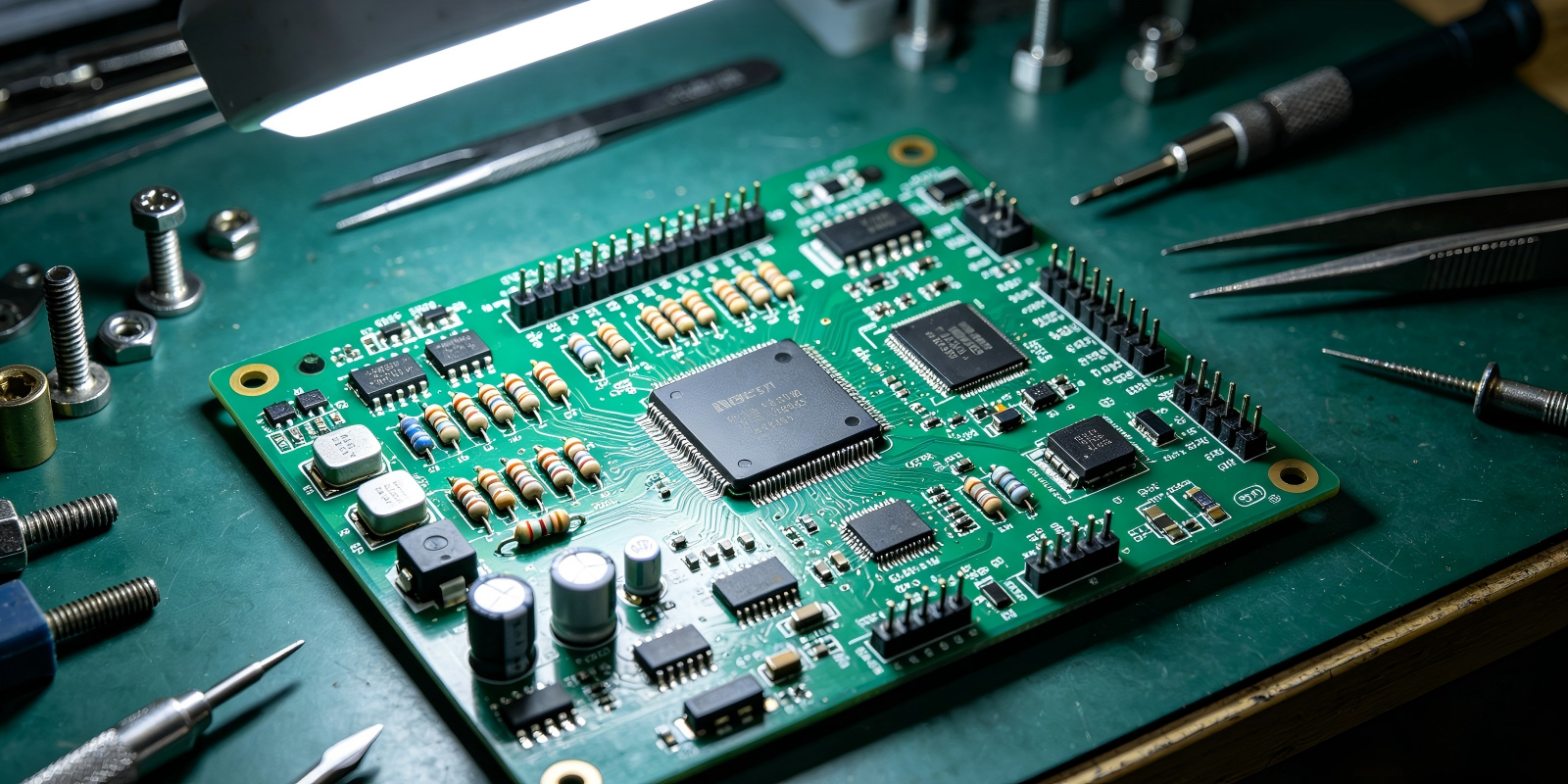
It is very important to work with the right tools to prevent lead damage and achieve quality:
Round-tip needle-nose pliers to make manual adjustments.
Jigs of lead bends to form uniformly.
Automated formers for high‑volume processing
clean lead trimming sharp, flush cutters.
Once the components are inserted, it is important to observe the best practices of lead cutting:
Only securely placed, cut.
Allow 1-2 mm of lead to be soldered.
Sharp cutters should be used to prevent crushing leads.
Keep metal debris under control to avoid short circuits.
Nick cut at a slight angle to enhance solder flow.
These processes minimize defects and provide a neat and professional finish to the assembly.
Typical Problems and Solutions
There are some common problems in lead forming:
Damage to components bodies: when bent too near the casing; remedy to maintain a safe distance of bend.
Bends not very straight: remedied with jigs or automated.
Stress and cracking of lead: prevented by smooth bends and correct radius.
Short circuits due to debris: avoided through catch tray and clean workspace practices.
These issues can be dealt with dramatically to enhance the quality and reliability of the assembly.
One of the basic processes in leaded assembly that has a great impact on the performance and life of PCBs is component lead forming. Adhering to common procedures of axial and radial components, selecting suitable manual or automated procedures, professional equipment, and observing stringent trimming guidelines can help manufacturers minimize failures, simplify production, and create very reliable electronics.
All the difference lies in professional guidance and regular process control to optimize the through-hole assembly. PCBX offers the expertise and reliable solutions applied in industry to streamline the lead forming operations and provide high quality and consistent PCB assembly.
Hot Tags:

Contact us

If you can't find what you're looking for, please contact us.
Article
PCB assembly requires soldering, proper manual/automated tools, key techniques and best practices to ensure quality.
 2026/03/10
Effective PCB design ensures reliable electronics by optimizing component placement, connections, and testing, enhancing performance and longevity.
2024/10/31
Capacitors are crucial in circuits for storing energy. Testing methods include in-circuit and out-of-circuit using digital multimeters, ESR, and LCR meters. Proper testing ensures reliability and prevents malfunctions.
2024/09/20