
- Products & Capabilities

- About
- Resources
How to Choose Between FPGA and Microcontroller for PCB Design


Compare FPGA and MCU core differences, PCB layout tradeoffs & use cases to select the best processor for your embedded hardware design.d
The first engineering decision in every embedded PCB design is whether it uses a Microcontroller Unit (MCU) or a Field-Programmable Gate Array (FPGA) as the processing core. The architecture and working mechanisms of both power embedded electronic systems are quite different, and their PCB layout specifications are fundamentally different. The choice of this critical decision directly affects the operational performance, power efficiency, overall budget, development time, and future upgrade possibilities of a project. Understanding both the unique strengths and constraints of MCUs and FPGAs is crucial for PCB designers to prevent unneeded design duplication or inadequate system performance. This article provides pure original, PCB oriented insights to guide engineers for the right processor selection for different embedded design scenarios.
Fundamental Architectural Differences
The fundamental difference between MCUs and FPGAs is their operating logic, which is what all the other PCB design rules are based on. The term MCU is used to refer to a fully integrated, fixed-function chip with a CPU core, memory and standard peripherals. It runs the programmed instructions sequentially, line by line, to finish control tasks, to collect data and also to perform slow communication. The hardware design is fixed and only firmware updates allow for functions to be changed.
Unlike ASICs, FPGAs have a blank-slate hardware architecture of programmable logic arrays and reconfigurable interconnects and no fixed processing cores or peripherals. Dedicated hardware circuits are customized using hardware description languages (HDL) allowing for the fact that multiple independent logic tasks can be executed in parallel. In addition to this configurability, this hardware level differentiates FPGA from software limited MCUs and enables ultra-low latency and high throughput processing scenarios.
PCB Design and Performance Tradeoffs
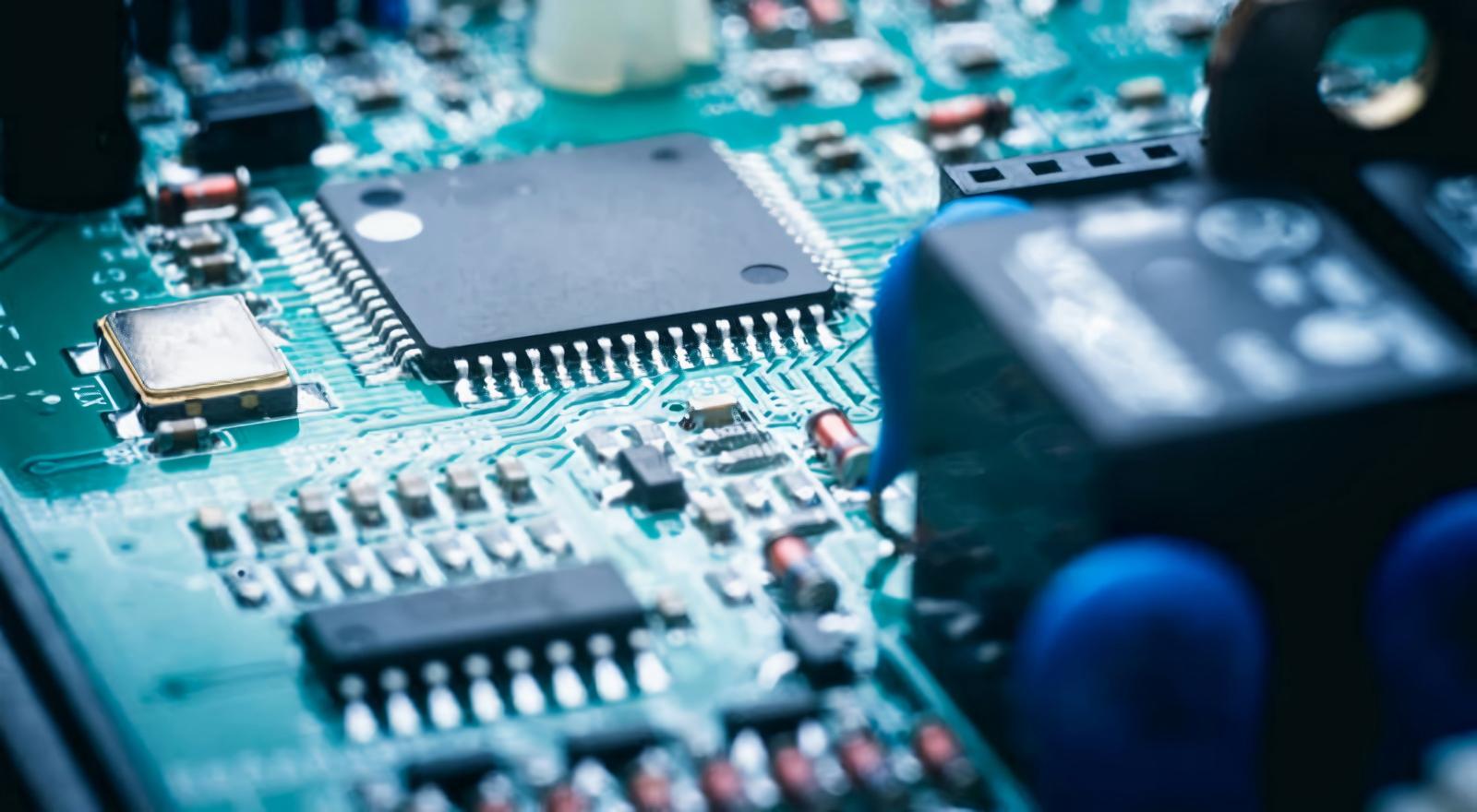
PCB designs based on MCU are extremely simple and functional. MCUs are packaged in a small size with a dense pin distribution and with highly integrated on-chip functions they need only a few auxiliary components. In most low to medium speed MCU apps, only 2-4 layer PCBs are required, routing is loose, there is no required high speed impedance matching, and high manufacturing yield is desired. In addition, MCUs provide multi-level low power sleep states which are suitable for battery operated portable applications and low energy terminals for IoT applications.
There are much more demanding PCB design requirements for FPGAs. High-performance models use packages that include many pins, which are split into multiple I/O power domains, and these packages must be powered by multiple power supply circuits that must be designed with power sequencing. For high-speed signals like differential signals and high bandwidth memory, the requirements for impedance control, trace length matching and crosstalk suppression are very tight and typically call for 6-12 precise layer PCBs. FPGAs offer significantly greater parallel processing power and nanosecond real-time response, but have more complex hardware designs, which results in higher power usage, increased heat generation and greater thermal layout planning requirements.
Cost and Development Cycle Evaluation
An important strength of MCU-based solutions is the ability to control cost and to speed up iteration. From cheap to mainstream low-cost designs, MCUs have low chip pricing and fewer peripheral matching requirements to significantly reduce BOM and PCB costs. The MCU development has a low learning barrier because of the high-level development frameworks, open-source libraries and extensive community technical support. It enables fast prototype verification and cost-effective product iteration to meet the market's requirements for short time-to-market and mass production.
On the other hand, FPGA-based solutions require greater initial development and hardware costs. The FPGA chips themselves are also more expensive, and use of FPGA involves extra configuration circuits, specially-designed power management circuits, and professional simulation software, all of which will increase project costs. Compared with ASIC, FPGA also has high technical requirements: Digital circuit knowledge, timing constraint debugging skills, etc., which leads to a longer development time. Despite this, its singular ability to reconfigure the field makes it possible to change the internal hardware logic and to increase product functions after the production of the PCB, ensuring unparalleled scalability and adaptability for iterations and custom-made embedded products.
Target Application Scenarios
MCUs are well suited for cost-sensitive low power and simple control applications such as smart home appliances, wearable devices, auxiliary control devices in automotive electronics and traditional sensor data acquisition systems. The requirement in these scenarios is to optimize stability, energy consumption, and fast mass production, and that is where sequential MCU processing can easily satisfy the demands of operation.
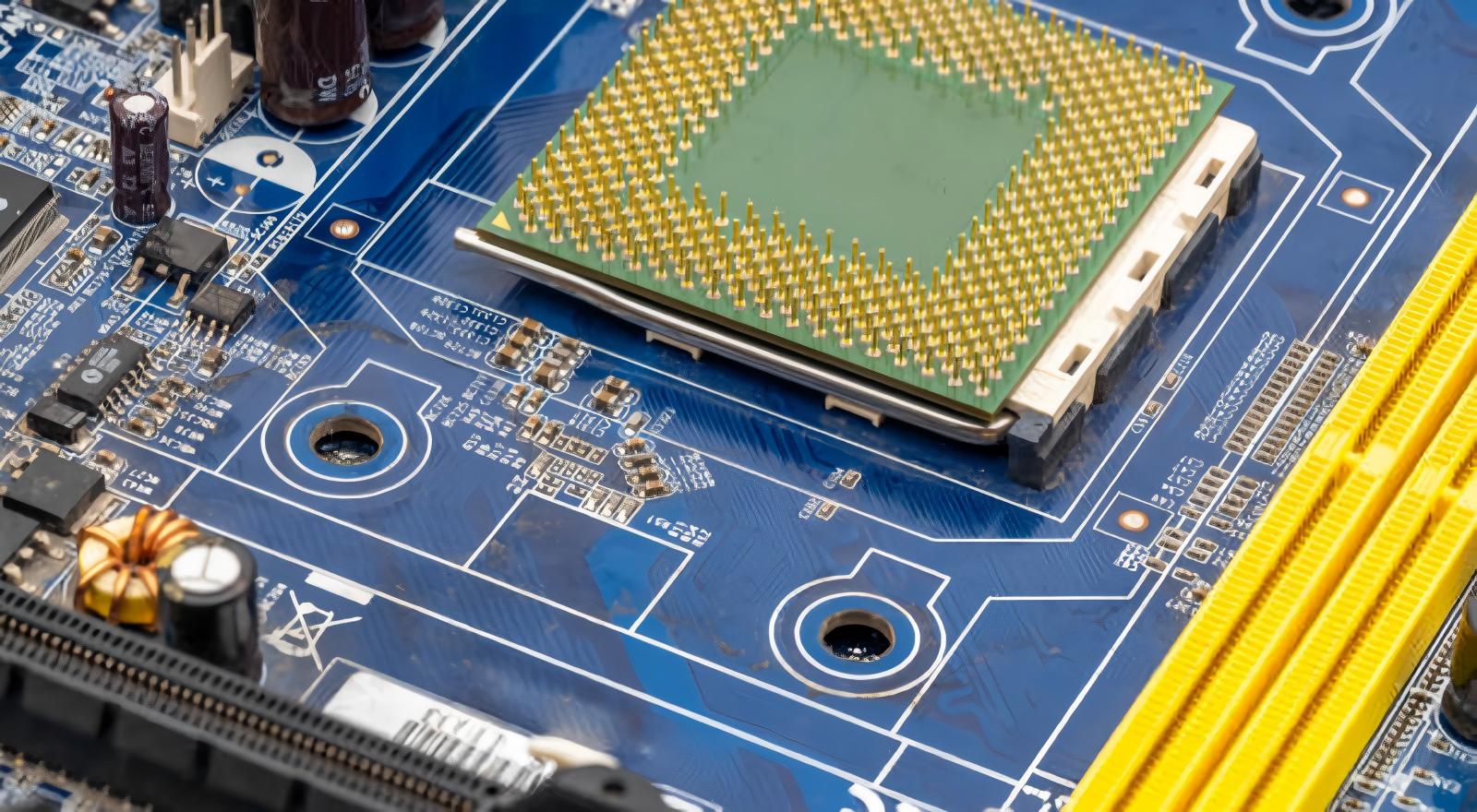
FPGAs are ideal for high performance, time-critical applications such as real-time digital signal processing, high-definition video processing, precision industrial motion control, and high-speed communication systems. They are irreplaceable for the design of high-end embedded hardware products, with their parallel computing and low-latency processing, to eliminate performance bottlenecks of the sequential MCU operation.
However, for high-end systems, a hybrid MCU+FPGA solution has become the mainstream approach. The MCU takes care of system scheduling, human-computer interaction and low-speed control, and the FPGA handles high-speed data processing, optimizing for cost, power consumption and system performance.
In conclusion, MCUs and FPGAs are used to design in two directions that are differentiated in embedded PCB. The simplicity, cost efficient and low power stability make MCUs ideal for traditional control, consumer electronics and low power IoT devices. FPGA systems are preferred for high-performance signal processing, communication and industrial precision control applications because they are dedicated to high-speed parallel computing, have very low latency, and offer hardware reconfigurability. For more complex scenario, the hybrid MCU-FPGA architecture is an ideal solution for balancing cost, power consumption and performance. When superior reliability, accuracy at the highest level and manufacturing capability for all embedded processor solutions is required, PCBX provides professional one-stop support for PCB fabrication, layout optimization and mass production.
Hot Tags:

Contact us

If you can't find what you're looking for, please contact us.
Article
Embedded electronics design focuses on small, low-power specialized computing systems, covering their classification, workflow, applications, benefits, challenges and future trends in modern tech.
 2026/03/12
ARM processors are efficient and flexible, ideal for many applications, while FPGAs offer custom parallel processing, crucial for specialized tasks requiring flexibility.
2025/01/21
FPGAs offer high flexibility and capacity for complex designs, while CPLDs provide simplicity and cost-effectiveness for smaller applications, crucial in PCBs.
2024/11/20